
homeopathy
Homeopathy is a complete system of medicine developed in the late 1700s by Samuel Hahnemann, a German physician and chemist. It is based on the principle that substances capable of producing symptoms in a healthy person can, when prepared in a specific way, stimulate healing in someone experiencing similar symptoms.
From its beginnings, homeopathy was developed and practiced by medical doctors. It emerged as a response to the harsh medical interventions of the time, offering a gentler, more individualised approach to care.
Today, homeopathy is used worldwide as a complementary system of medicine and is integrated into healthcare settings in many countries.
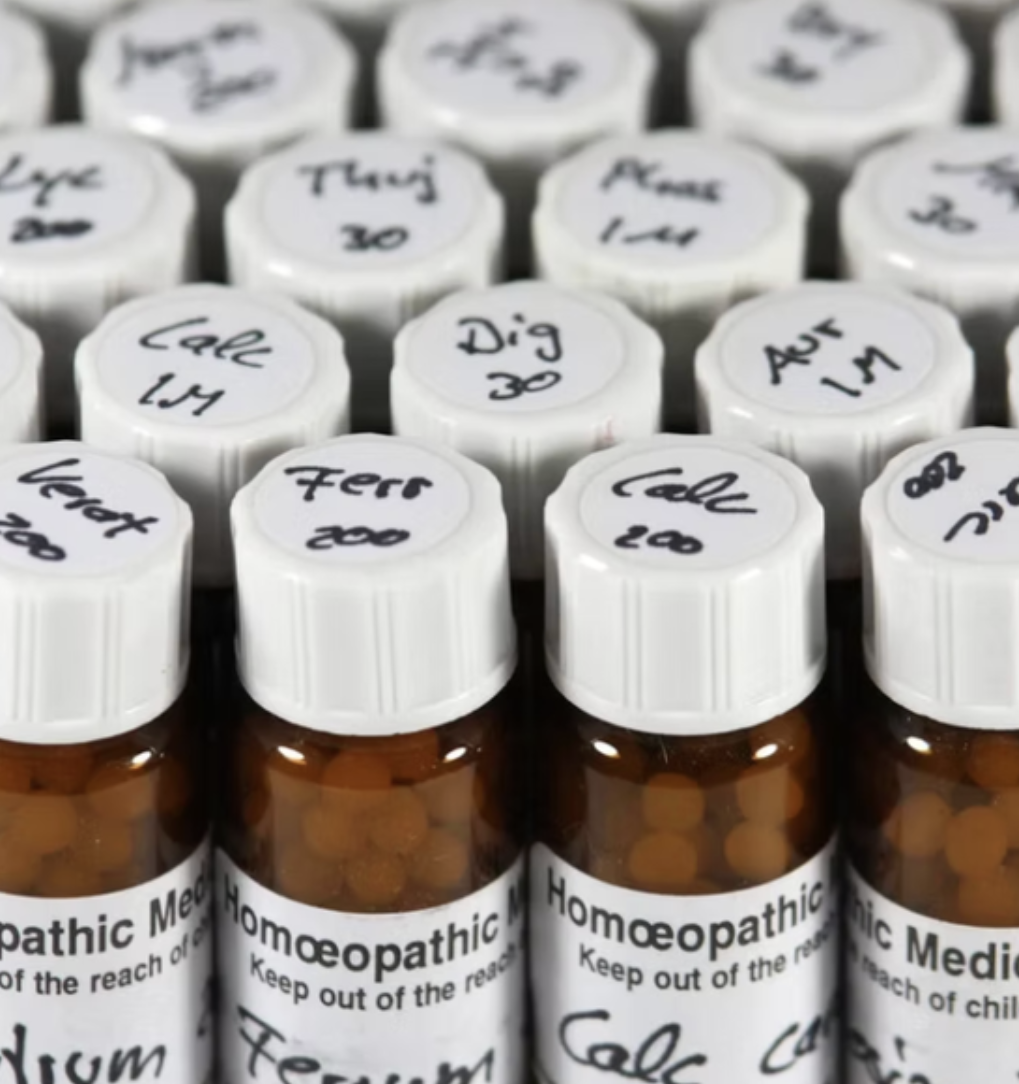
How homeopathy works
Homeopathy works by supporting the body’s own regulatory and healing responses rather than suppressing symptoms. Remedies are chosen according to the individual, not the diagnosis alone.
This means that two people with the same condition may receive different remedies, based on how their symptoms present physically, emotionally, and constitutionally. Homeopathy places importance on patterns, tendencies, and how the body responds over time.
Remedies are prepared according to strict pharmacopoeial standards and are highly diluted, making them gentle, non-toxic, and suitable for people of all ages.
How homeopathy is used in practice
Homeopathy can be used to support both acute and long-standing concerns and may be used alongside conventional medical care.
It is commonly used to support:
Emotional and mental wellbeing
Stress-related and nervous system patterns
Skin conditions
Digestive and hormonal imbalances
Acute illnesses such as colds, infections, and minor injuries
Recovery from illness, shock, or trauma
Homeopathy does not aim to override the body, but to encourage it to respond more effectively.
Homeopathy within naturopathic care
Homeopathy is a specialist discipline in its own right. While naturopaths are not homeopaths, homeopathy is often included within naturopathic practice as one of several therapeutic tools.
Within naturopathy, homeopathy is used thoughtfully and within scope, particularly for acute conditions and constitutional support. More complex or specialised cases may be referred to a qualified homeopath where appropriate.
Safety and suitability
Homeopathic remedies are considered low-risk when used appropriately. They can be taken alongside conventional medications without known adverse interactions.
As with any therapeutic approach, responses vary. Some people notice gradual improvement, while others experience subtle shifts over time as the body recalibrates.
Homeopathy is suitable for babies, children, adults, and the elderly and can be used during pregnancy under professional guidance.
A long-standing medical tradition
Homeopathy has over 200 years of documented clinical use and continues to be supported by professional medical organisations worldwide. It has historically been used by physicians and remains recognised within integrative and person-centred healthcare models.
The Faculty of Homeopathy in the United Kingdom, founded in 1844 and incorporated by Act of Parliament, continues to uphold standards of education, research, and practice. It is currently under the Royal Patronage of His Majesty King Charles III, reflecting a long-standing tradition of support for homeopathy within integrative medicine.
An individualised approach
Homeopathy does not claim to cure disease or replace medical care. Instead, it offers a way of supporting the whole person, taking into account physical symptoms, emotional state, constitution, and life context.
Some people respond well to homeopathy, others less so. Like all forms of care, its value lies in careful assessment, appropriate use, and realistic expectations.
Frequently Asked Questions
-
Homeopathy works on the principle of stimulation rather than supplementation. Remedies aren’t used to chemically override the body, but to gently signal or prompt the body’s own regulatory response. The focus is not on the material dose, but on the information or energetic stimulus provided to the system.
One way people find helpful to think about dilution is to imagine adding a single drop of juice into a large bucket of water. After enough dilution, you may not be able to see it, taste it or smell it anymore. But that doesn’t mean nothing happened. You know the drop was added. Something changed, even if it’s no longer detectable by the senses. Homeopathy works with this idea, that while the material substance may no longer be measurable, the information or imprint of what was added remains and is what the body responds to. -
“Like cures like” refers to the idea that a substance capable of producing certain symptoms in a healthy person may help stimulate healing in someone experiencing similar symptoms. It’s not about suppressing symptoms, but about encouraging the body to resolve them. This principle has been used in homeopathy for over 200 years and guides remedy selection on an individual basis.
-
Homeopathy was originally developed by a medical doctor, Samuel Hahnemann, at a time when all healthcare was physician-led. In its early history, homeopathy was practised almost exclusively by doctors, and homeopathic hospitals operated throughout Europe, the UK, and Australia. In fact, Australia had functioning homeopathic hospitals into the early 20th century, including up until the 1930s.
As medicine changed with the industrial revolution and the rise of pharmaceutical drug development, healthcare systems increasingly shifted toward treatments that could be standardised, patented and mass-produced. Over time, homeopathy was gradually sidelined within Western medical institutions. This shift reflected changes in healthcare models and economics, rather than a single moment where homeopathy was proven invalid.
Despite this, homeopathy has never disappeared. Many doctors around the world still practise and prescribe homeopathy, particularly in countries such as India, Germany, France and parts of Europe, where it remains integrated into healthcare systems. Today, homeopathy is practised both by medically trained doctors and by non-medical practitioners who undertake specialised training. Its continued use reflects differing views on evidence, tradition, and how healing is understood across cultures.
-
The placebo argument is often raised with homeopathy. While expectation and perception do influence health, this explanation becomes less convincing when responses are seen in infants, young children, animals or people who are sceptical of homeopathy. These observations don’t prove how homeopathy works, but they do suggest that placebo alone may not explain all responses.
-
It’s true that many Western health systems have shifted away from funding or promoting homeopathy over the past 10–20 years. However, this doesn’t reflect global practice. Homeopathy remains widely used and formally integrated into healthcare systems in countries such as India, where it is a recognised medical system and a leader in ongoing research. It is also still used in countries including Germany, France, Belgium, Russia and parts of Europe.
Homeopathic medicines continue to be manufactured in regulated laboratories worldwide, including Australia, India and parts of Europe. Its continued use internationally reflects differing models of healthcare, evidence and tradition.
-
Homeopathic remedies are generally considered safe for a wide range of people, including infants, children, pregnant or breastfeeding women, and the elderly, because they don’t act through chemical drug interactions. That said, it’s important that homeopathy is used appropriately and alongside, not instead of, necessary medical care. Any existing medications or conditions should always be discussed during a consultation.